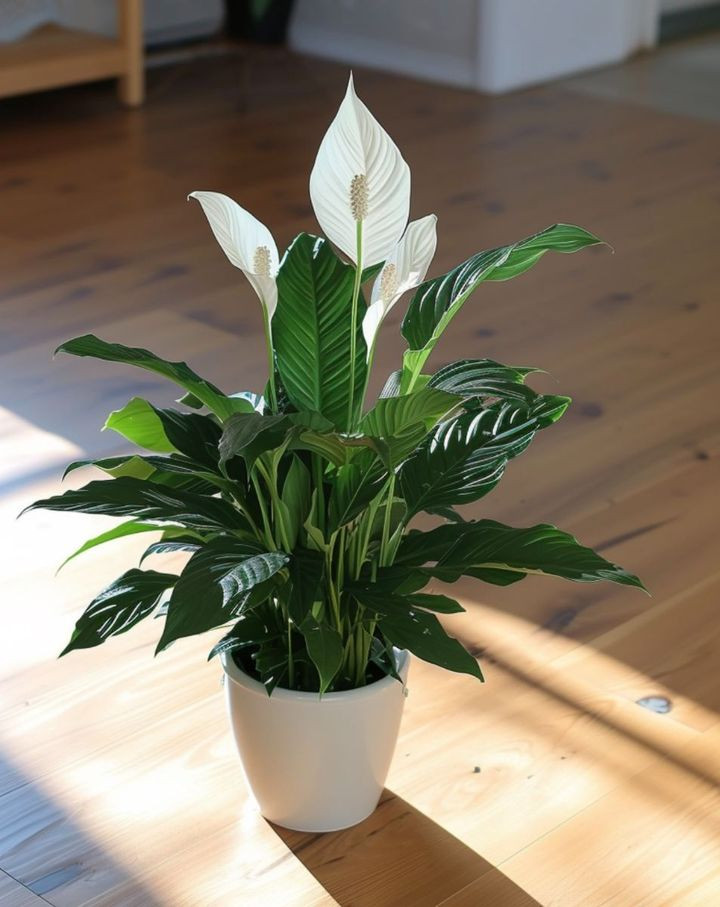
Peace lilies prefer warm temperatures between 18 and 26 degrees Celsius (65 and 80 degrees Fahrenheit). Protect them from drafts and extreme temperature changes, which can stress the plant and affect flowering.
7. Prune off spent flowers and yellow leaves
Regularly removing spent leaves and spent flowers can redirect the plant’s energy toward new growth and flowering. Use clean, sharp scissors to avoid damaging the plant.
8. Provide the right soil
The right soil can make a huge difference. Use a well-draining peat-based potting mix. Soil that allows for adequate aeration and drainage will support the plant’s overall health, contributing to its ability to flower.
9. Consider the pot size
While peace lilies can bloom with light root support, a pot that is too small can restrict growth and flowering. On the other hand, a pot that’s too large can lead to excess moisture in the soil and potential root rot. Choose a pot that gives the plant some room to grow, but not so much that the soil remains moist for long periods.
10. Use Bloom Booster Fertilizer
Consider using a fertilizer with a higher phosphorus content (the middle number in the fertilizer ratio) to encourage blooms. Use this type of fertilizer sparingly and according to the package instructions to avoid damaging the plant.
11. Be Patient
Finally, remember that patience is key. Even if you provide ideal conditions, peace lilies can take time to bloom. They typically bloom in spring, but they can surprise you at other times if they’re particularly happy with their surroundings. Care for them consistently, and your peace lily will eventually reward you.
Ensuring your peace lily is happy and healthy is the best way to encourage blooms. Every plant is unique, so finding the perfect combination of care techniques that works for you may take some time. Monitor your plant’s response to the changes you make, and with these expert tips, you’re sure to enjoy the peaceful beauty of peace lilies in your space.
