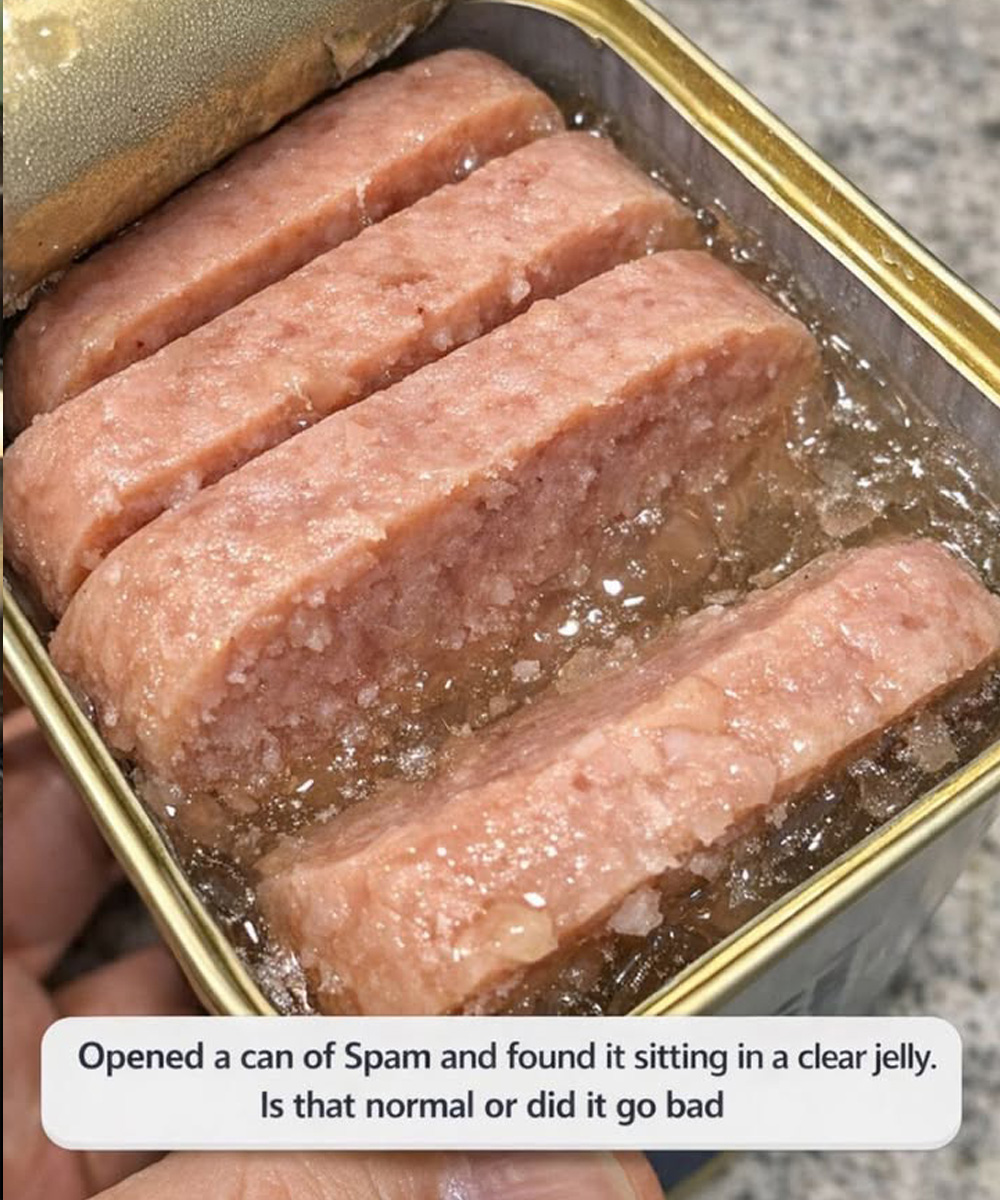
Spam, the well-known canned meat product, has been a familiar item in kitchens since it first appeared in the 1930s. Valued for its long shelf life and flexibility in cooking, Spam is commonly stocked in pantries worldwide and can be sliced, fried, baked, or mixed into countless recipes. That said, first-time users are often surprised when they open a can and see the meat surrounded by a clear, jelly-like substance. This sight can raise immediate questions: Is this normal? Is the Spam spoiled?
Before throwing the can away, it’s important to know that this clear jelly is usually harmless and expected. Jelly is a common feature in many canned meat products and does not automatically indicate spoilage. This article explains what the jelly is, why it appears, and how to tell whether your Spam is still safe to eat.
1. What Is the Clear Jelly on Spam?
The transparent jelly found in Spam is natural gelatin created during the cooking and canning process. It comes from collagen present in the pork and ham used to make Spam. When the meat is cooked, the collagen breaks down into liquid gelatin. As the product cools after sealing, that liquid solidifies, forming the jelly seen in the can.
Unlike the thicker gels found in homemade broths or stews, Spam’s jelly is usually clear and odorless. It’s a normal component of the product and helps retain moisture and flavor throughout its long storage life, ensuring the meat stays tender and flavorful.
2. Why Gelatin Forms Inside the Can
Spam is produced to be shelf-stable. During cooking, heat causes collagen proteins in the meat to convert into gelatin. Once sealed and cooled, the gelatin firms up naturally.
This process not only keeps the meat juicy but also provides an additional protective barrier against bacteria and environmental exposure, allowing Spam to remain safe for extended periods without refrigeration.
3. Telling Normal Gelatin Apart From Spoilage
While gelatin itself is normal, certain changes can signal spoilage. If the jelly smells unpleasant, becomes unusually thick, or changes color, caution is advised. Normal jelly should appear clear or slightly amber and have little to no odor.
Cloudiness, greenish tones, or foul smells are warning signs. Bulging or leaking cans are also red flags, as they may indicate bacterial activity. In these cases, the contents should not be eaten.
4. Visual Signs to Examine
When inspecting Spam, observe both the jelly and the meat. Healthy gelatin should look smooth and translucent, not slimy or discolored. Any green, black, or dark brown coloration suggests spoilage.
The meat itself should be evenly pink. Gray patches, brown spots, or uneven coloring may mean the product has gone bad and should be discarded.
