8. When To Turn Off the Main Water Line to the Entire House
If the specific shut-off valve for your outdoor faucet is inaccessible or ineffective, you may need to turn off the main water line. This is especially important if multiple faucets or areas of your home are affected by the leak. The main valve is typically located near your water meter or where the water line enters your home.
Shutting off the main water supply is a temporary solution to prevent widespread damage. Before doing so, ensure you have a plan to address immediate water needs, such as filling pots or buckets with water for essential uses.
9. Documenting the Damage for Insurance and the Plumber
It’s crucial to document the damage for insurance purposes and to provide your plumber with accurate information. Take clear photos and videos of the affected areas, including any visible damage to the walls, flooring, and personal belongings. Keep records of any immediate repairs or actions you take to mitigate damage.
Contact your insurance company to report the incident and inquire about coverage for water damage. They may require detailed documentation to process your claim, so be thorough in capturing evidence of the event.
10. Temporary DIY Fixes: Caps, Tape, and Buckets While You Wait
While waiting for the plumber, you can apply temporary fixes to control the situation. Use pipe repair tape or rubber patches to seal any visible cracks or leaks in the pipe. If water is still dripping, place a bucket underneath to catch the flow and prevent further water damage.
Consider using pipe caps to close off the end of the pipe if it’s accessible and continues to leak. These solutions are not permanent, but they can help manage the situation until professional repairs can be made.
11. How To Talk to Your Plumber So Repairs Go Faster
When the plumber arrives, provide them with detailed information about the issue, including when you first noticed the leak, the steps you’ve taken so far, and any signs of damage you’ve observed. Share any documentation or photos you have, as this can help the plumber assess the situation more quickly and accurately.
Be prepared to discuss any previous plumbing issues or repairs in the affected area, as this background information can provide valuable context. Clear communication can expedite the repair process and help ensure all necessary actions are taken.
12. Preventing the Next Freeze: Long-Term Hose Bib Protection
To prevent future freezing, consider installing frost-proof outdoor faucets, which are designed to prevent water from remaining in the pipe where it can freeze. Additionally, insulate outdoor pipes and faucets with foam covers or insulation tape to protect them from the cold.
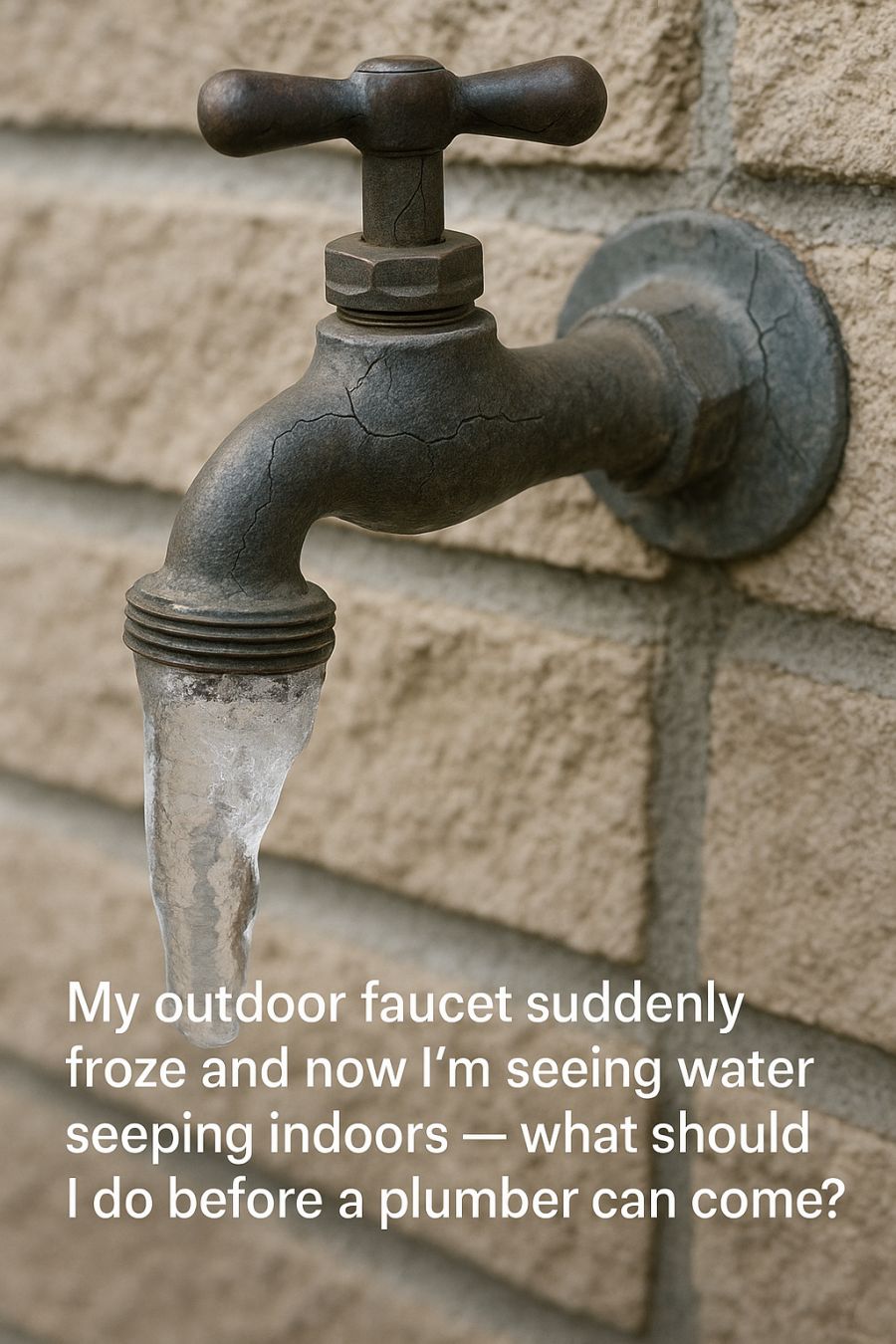
My outdoor faucet suddenly froze and now I’m seeing water seeping indoors — what should I do before a plumber can come?
During the winter months, disconnect hoses from outdoor faucets, as water trapped inside can freeze and cause pressure buildup. Regularly check your pipes for signs of wear or damage, and address any issues promptly to prevent winter-related plumbing emergencies.
