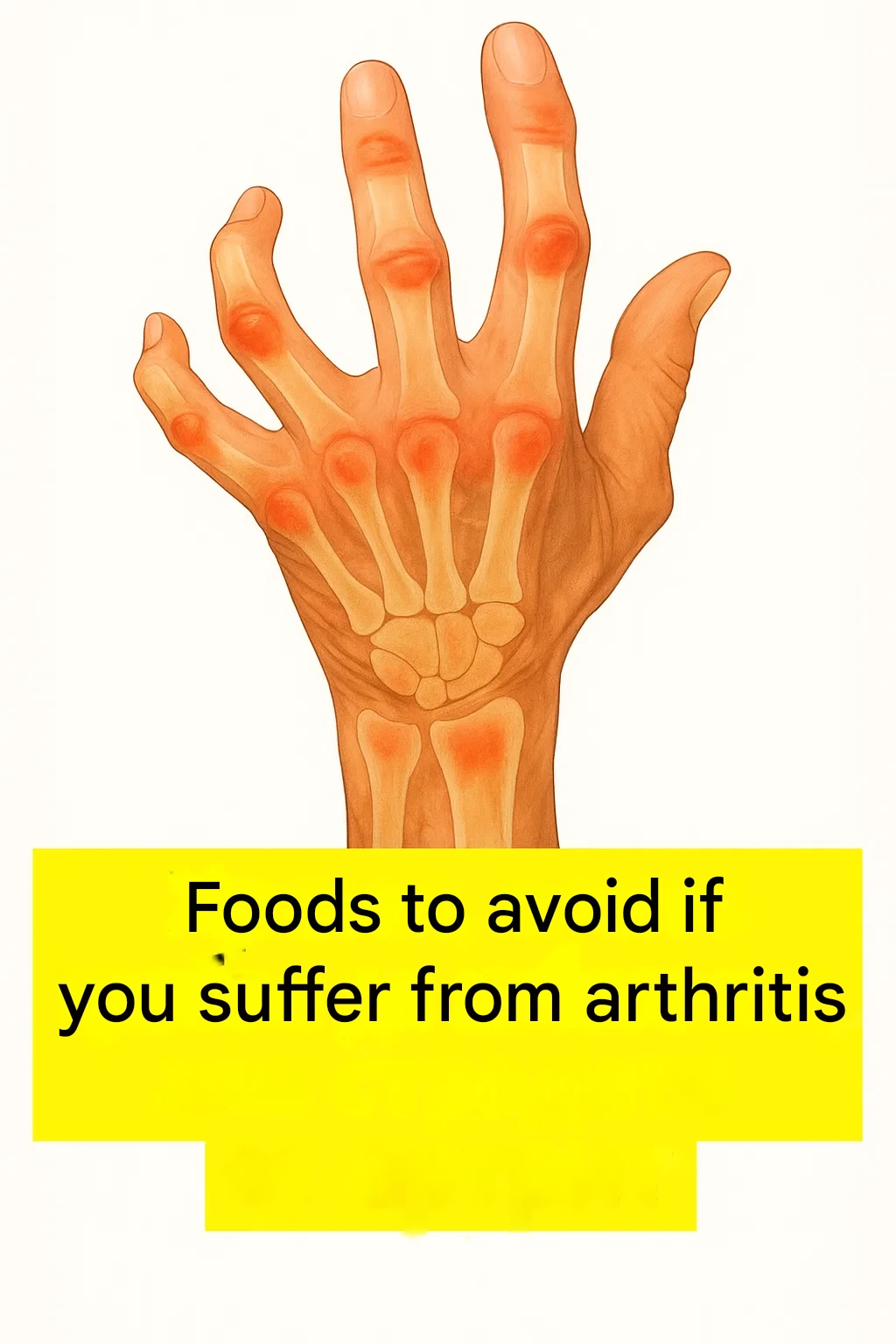
• Joint pain
• Redness and swelling
• Stiffness, especially in the morning
• Limited range of motion
Risk factors
• Advancing age
• Being overweight
• Heredity
• Past joint injuries
• Unhealthy eating habits
Inflammation – a key mechanism in arthritis
Inflammation is the body’s natural defense mechanism. However, when it becomes chronic, it damages tissues and causes pain and stiffness. The foods we eat can either aggravate inflammation or soothe it.
Foods that increase inflammation
Refined sugar and processed carbohydrates
Sweets, cookies, pastries, and white bread sharply increase blood sugar levels and provoke inflammatory processes.
Trans fats and refined vegetable oils
Found in fast food, fried foods, and packaged products, they damage cells, increase weight, and increase pain.
Red and processed meat
They contain saturated fats and preservatives, which negatively affect inflammation.
Full-fat dairy products and aged cheeses
In some people, milk proteins cause more stiffness and discomfort in the joints.
Alcohol and sweetened beverages
Alcohol can interact with medications and increase inflammation. Sodas and energy drinks with lots of sugar have a similar effect.
Excessive salt and highly processed foods
Excess sodium leads to fluid retention and additional pressure on sensitive joints.
Foods that help relieve symptoms
Fruits and vegetables rich in antioxidants
Blueberries, strawberries, spinach, broccoli – protect cells from oxidative damage.
Fatty fish rich in omega-3
Salmon, tuna, sardines – natural fighters against inflammation.
Legumes and whole grains
They help with weight control, improve digestion, and provide plant-based protein.
Nuts and seeds
Almonds, walnuts, chia – sources of healthy fats and antioxidants.
Spices with anti-inflammatory properties
Turmeric, ginger, garlic – natural remedies for soothing joint inflammation.
Practical tips for improving nutrition
Menu planning
A weekly menu helps you avoid random unhealthy choices. At the same time, it provides a balance between proteins, vegetables and healthy fats. Examples of easy meals: salmon salad, lentil soup, oatmeal with fruit.
Small but important kitchen changes
• Replace carbonated drinks with water or herbal tea
• Steam or bake instead of frying
• Choose chicken, turkey or fish instead of red meat
• Use olive oil instead of refined oils
Be careful with portions.
Portion control is just as important as food choices themselves. Maintaining a healthy weight significantly reduces the strain on your joints.
The ideal plate includes:
• 50% vegetables and fruits
• 25% clean protein
• 25% whole grains
Additional recommendations for arthritis
Drink enough water.
Proper hydration helps keep joints lubricated. Aim for 1.5 – 2 liters daily.
Light, body-friendly activity
Walking, swimming, yoga, and Pilates keep joints mobile and reduce stiffness.
Sleep and stress management
Adequate sleep helps tissue repair. Techniques such as deep breathing, meditation, or relaxation reduce stress-induced inflammation.
